
News and events from the Institute of Cancer Therapeutics
You can find notable news articles relating to the Institute of Cancer Therapeutics below.
August 2023
Evidence of rebound elevated colorectal polyp risk after short-term aspirin use.
Introduction: The seAFOod polyp prevention trial was a randomised, placebo controlled, 2 × 2 factorial trial of aspirin 300 mg and eicosapentaenoic acid (EPA) 2000 mg daily in individuals who had a screening colonoscopy in the English Bowel Cancer Screening Programme (BCSP). Aspirin treatment was associated with a 20% reduction in colorectal polyp number at BCSP surveillance colonoscopy 12 months later. It is unclear what happens to colorectal polyp risk after short-term aspirin use.
Aim: To investigate colorectal polyp risk according to the original trial treatment allocation, up to 6 years after trial participation.
Methods: All seAFOod trial participants were scheduled for further BCSP surveillance and provided informed consent for the collection of colonoscopy outcomes. We linked BCSP colonoscopy data to trial outcomes data.
Results: In total, 507 individuals underwent one or more colonoscopies after trial participation. Individuals grouped by treatment allocation were well matched for clinical characteristics, follow-up duration and number of surveillance colonoscopies. The polyp detection rate (PDR; the number of individuals who had ≥1 colorectal polyp detected) after randomization to placebo aspirin was 71.1%. The PDR was 80.1% for individuals who had received aspirin (odds ratio [OR] 1.13 [95% confidence interval 1.02, 1.24]; p= 0.02). There was no difference in colorectal polyp outcomes between individuals who had been allocated to EPA compared with its placebo (OR for PDR 1.00 [0.91, 1.10]; p= 0.92).
Conclusion: Individuals who received aspirin in the seAFOod trial demonstrated increased colorectal polyp risk during post-trial surveillance. Rebound elevated neoplastic risk after short-term aspirin use has important implications for aspirin cessation driven by age-related bleeding risk.
To read the full article
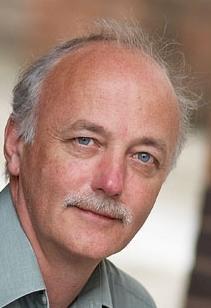

Prof. Paul Loadman from the Institute of Cancer Therapeutics (ICT) and co-author of the recently published article in Alimentary Pharmacology and Therapeutics said "This paper is the result of a long and fruitful collaboration with Prof Mark Hull (Consultant Gastroenterologist) in Leeds as part of the NIHR funded seAFOod trial looking at the influence of aspirin and an Omega -3 fatty acid (EPA) on patients with colorectal polyps. All analytical studies of complex fatty acid metabolism were undertaken at the ICT at the Univeristy of Bradford but other centres involved in the clinical side and importantly the statistical side included Newcastle, London, Sheffield and Oxford."
July 2023
The Institute of Cancer Therapeutics featured in BBC2’s Great British Railway Journeys, broadcast on BBC2
The episode, presented by former MP turned TV presenter Michael Portillo, tours parts of the university campus and the Institute for Cancer Therapeutics.
Professor Sherif El-Khamisy, Director of the ICT, who also appears in the episode, said: “We’re hugely proud to have been featured in this TV series. Bradford has a long and proud history of cancer research which dates back to the 1950s, and we continue that tradition today, using cutting edge research as we work to find treatments for cancer.”
Watch the episode on BBC iPlayer here.
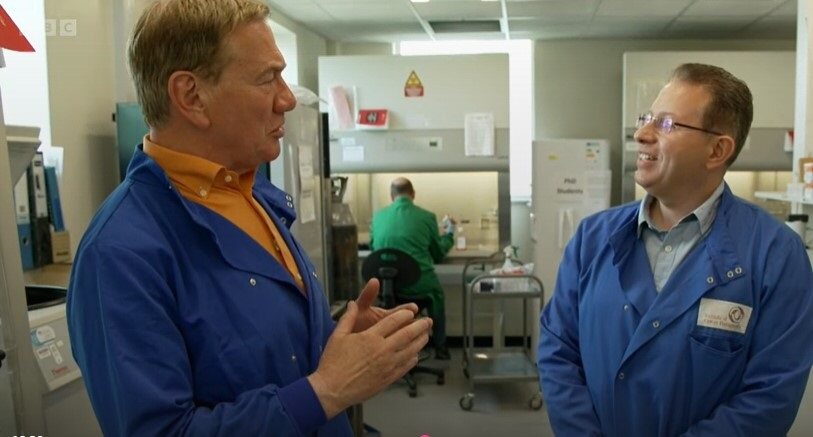
Prof Sherif El-Khamisey talks to Michael Portilo in the ICT
June 2023
Bio-Partnering event success crucial to future of cancer therapeutics
Delegates from across the region gathered in Bradford recently for the second annual ‘Bio-Partnering’ conference.
The event is hosted by the University of Bradford’s Institute for Cancer Therapeutics (ICT) and is designed to bring academia and industry together.
Professor Sherif El-Khamisy, Director of the ICT and Associate Dean for Research at the University of Bradford in the Faculty of Life Sciences, said: “The event was a huge success, with around 90 people from over 50 companies. Bradford has a strong reputation when it comes to conducting cancer research and showing how scientific research can have a tangible effect on society.
“We are delighted to have established Yorkshire Bio-Partnering at Bradford as an annual event that brings together academia and industry to highlight the challenges and successes of collaborative translational research and provide the opportunity to ignite new relationships”.
This year’s event featured keynote lectures from Prof Chris Twelves, nationally renowned medical oncologist from the University of Leeds, who discussed the UK Clinical Research Facility Network and how it supports collaborations between academia and the NHS in developing novel cancer therapeutics and Sophie Dale-Black from the UK Network (Midlands and North of England, British Business Bank) who discussed funding opportunities for business and collaborative research.
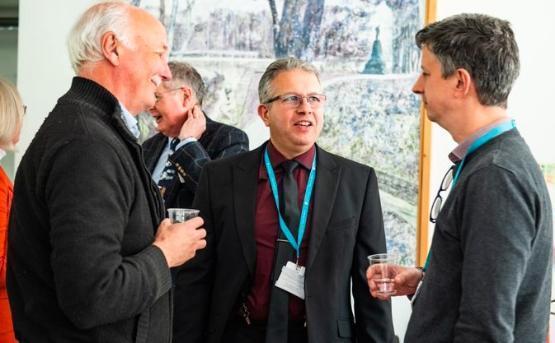
Prof. El-Khamisy said: “With the Yorkshire region and the M62 corridor being home to many innovative companies in the healthcare and bioscience sector, the event celebrated specialist expertise and collaboration in pharmaceuticals, diagnostics, nutraceuticals and specialty ingredients.
April 2023
Exciting New Job Opportunities at the Institute of Cancer Therapeutics
The Institute of Cancer Therapeutics at the University of Bradford are currently advertising for 2 academic posts: (i) Cancer Biology/Therapeutics, (ii) Cancer Pharmacogenomics, and 2 research support roles: (i) Drug Metabolism and Molecular Biology, (ii) Medicinal chemistry. Please see details below:
Job Opportunity at the University of Bradford: Lecturer in Cancer Biology and Therapeutics (Grade 8). Closing Date 2 May. https://jobs.bradford.ac.uk/HR0143909
Job Opportunity at the University of Bradford: Assistant Professor in Cancer Pharmacogenomics (Grade 9). Closing Date 25 Apr. https://jobs.bradford.ac.uk/HR0144986
Job Opportunity at the University of Bradford: Senior Technician in the Drug Metabolism & Pharmacokinetics (DMPK) and Molecular Biology labs (Grade 7). Closing Date 2 May. https://jobs.bradford.ac.uk/HR0143808
Job Opportunity at the University of Bradford: Medicinal Chemistry Technician (Grade 5). Closing Date 2 May 23. https://jobs.bradford.ac.uk/HR0143825
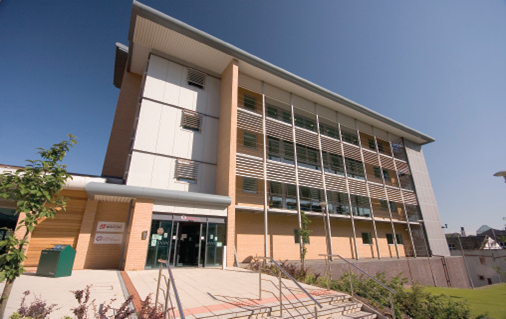
The Institute of Cancer Therapeutics at the University of Bradford
January 2023
The ICT ‘FROLIC’ Festival
The ICT is holding its inaugural FROLIC festival on Saturday 4th February 2023 at 10.30am-1pm held at The Broadway Shopping Centre (outside M&S) in Bradford city centre.
The aim of the festival is to engage and interest members of the public about cancer research and the work we do at the ICT, whilst getting awareness about the ICT into the community through fun, family-friendly science activities.
A summary of the activities is given below:
|
Table number |
Activity |
|
1 |
Making sweetie DNA (plus stamp cards) |
|
2 |
Match the dates!(Drug discovery) |
|
3 |
Extract DNA from strawberries |
|
4 |
Looking down the microscope |
|
5 |
Velcro prodrugs! |
|
6 |
Magic balloons |
|
7 |
Information/certificates |
For more information please contact organizers Hannah Moody or Amelia Ruiz Estrada.
Please download the Frolic Festival Flyer below:
Frolic Festival Flyer
The ICT FROLIC festival on Saturday 4th February 2023 at 10.30am-1pm held at The Broadway Shopping Centre (outside M&S) in Bradford city centre.
If you require this information in an alternative format, please contact our team. You can also read our Website Accessibility Statement.
December 2022
ICT Global Seminar Series
The Institute of Cancer Therapeutics warmly invites you to a global edition of our seminar series on Thursday 8ᵗʰ December 2022 at 12pm (GMT).
Professor Sameh Ali of the 57357 Children’s Cancer Hospital will be presenting
‘Conceptual Approach for Personalized Targeting ofMetabolism and Mitochondria in Breast and Brain Cancers"
Prof. Ali is currently the Unit Head of the Tumour Biology Program at 57357 Children's Cancer Hospital, Egypt. He was the Founding Director of the Centre for Ageing and Associate Diseases, Helmy Institute of Medical Sciences, Zewail City of Sciecne and Technolgy and alos professor of biophysics at Zewail City.
Prof. Ali's work has produced over 60 highly cited articles in high-impact journals incluidng Science, Proceedings of the National Academy of Sciences, Ageing Cells, Antioxidant and Redox Signaling, FASEB J, J Neurosciences, Free Radical Biology and Medicine, J of Clinical Investigations, J of Biological Chemistry, J of Physiology, Neurobiology of Ageing, J Adv Res, eLife, Front. Immunol., etc. His work also contributed to the production of two U.S. Patents on carboxyfullerenes as neuroprotective agents.
To access the seminar please utilise the following
MS Teams link.
We look forward to seeing you there.
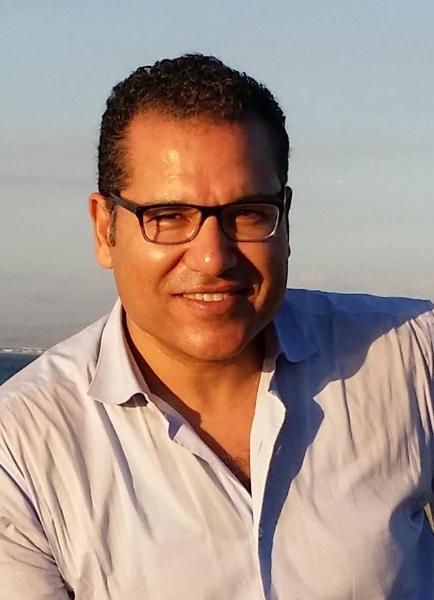
Professor Sameh Ali Unit Head of the Tunour Biology Program at 57357 Children's Cancer Hospital
November 2022
ICT Director presents Keynote lecture at BioNow conference
Professor Sherif El-Khamisy Director of the Institute of Cancer Therapeutics presented a Keynote lecture at the BioNow Oncology & Precision Medicine Conference October 18/19th 2022 held at Alderley Park, Cheshire, UK. The conference was a a unique opportunity for researchers and industry to come together to explore the relationship between Oncology and Precision Medicine. The Conference included Keynote talks and panel discussions on topics ranging from clinical trials, to artificial intelligence, to the importance of hearing the cancer patient's voice.
Prof El-Khamisy commented "At the Institute of Cancer Therapeutics, we focus on three main pillars; the basic discovery signs, making molecules and drugs for targets, target validation, and the preclinical development. What I talked about today is mainly the discovery signs. Particularly, how can we utilize our knowledge of how cells repair DNA damage and exploit this to treat cancer in a more targeted or precise way. In a study we published in Nature last week, we found high genomic damage in non-protein coding sequences, highlighting the need for doing whole genome sequencing rather than just focusing on the exon because a lot is happening outside the exons"
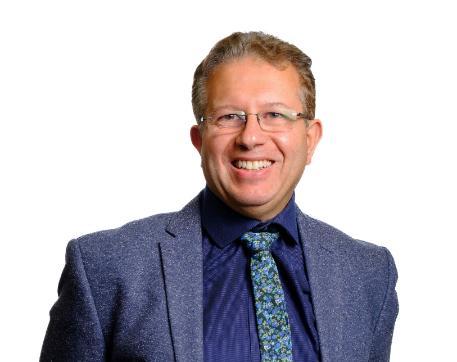
Prof. Sherif El-Khamisy Director of the Institute of Cancer Therapeutics
September 2022
DNA discovery made by ICT Director
Director of the Institute of Cancer Therapeutics Professor Sherif El-Kamisy has made a major breakthrough in the understanding of how DNA repairs itself. His findings are published in Nature. The discovery was made after Professor El-Khamiy's team were examining proteins in the cerebellum - the part of the brain responsible for motor function - when they encountered something extraordinary. When looking at cells in the cerebellum, the team found a high concentration of the nuclear mitotic apparatus protein (NuMA), which is primarily responsible for cell division.
Oxidative genome damage is an unavoidable consequence of cellular metabolism. It arises at gene regulatory elements by epigenetic demethylation during transcriptional activation. Here we show that promoters are protected from oxidative damage via a process mediated by the nuclear mitotic apparatus protein NuMA (also known as NUMA1). NuMA exhibits genomic occupancy approximately 100 bp around transcription start sites. It binds the initiating form of RNA polymerase II, pause-release factors and single-strand break repair (SSBR) components such as TDP1. The binding is increased on chromatin following oxidative damage, and TDP1 enrichment at damaged chromatin is facilitated by NuMA. Depletion of NuMA increases oxidative damage at promoters. NuMA promotes transcription by limiting the polyADP-ribosylation of RNA polymerase II, increasing its availability and release from pausing at promoters. Metabolic labelling of nascent RNA identifies genes that depend on NuMA for transcription including immediate–early response genes. Complementation of NuMA-deficient cells with a mutant that mediates binding to SSBR, or a mitotic separation-of-function mutant, restores SSBR defects. These findings underscore the importance of oxidative DNA damage repair at gene regulatory elements and describe a process that fulfils this function.

Professor El-Khamisy explained: “Unlike other tissues in the body, most cells in the brain do not reproduce, which means when you lose them, they are gone forever. However, when we were looking at cells in the cerebellum, we found a high concentration of the nuclear mitotic apparatus protein (NuMA), which is primarily responsible for cell division.
It is hoped the discovery will lead to new research that could result in the development of improved diagnosis and treatment for a variety of conditions. Professor El-Khamisy added: “When we began our study, this was not something we went looking for, so in a way we stumbled into it. This will open new fields of investigation into diagnostic and therapeutic treatments. We often as humans look at the obvious and ignore the less obvious. From that perspective, this is certainly something that has been missed, but now found.