Wednesday 20 September 13:00-14:00
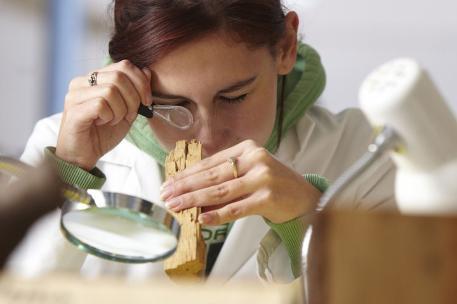
Using ideas from archaeology to improve the credibility of digital health research with Dr Peter Branney
See details and book now

Our Seminar Series showcases innovations in digital health and provides a forum for researchers, healthcare professionals, community, and business to network and learn about public engagement in healthcare and pathways to implementation of digital health solutions and new models of care.
If you are unable to attend a seminar but would like to either watch a specific monthly recording or request a presentation deck, please get in touch with us at dhez@bradford.ac.uk
Wednesday 20 September 13:00-14:00
Using ideas from archaeology to improve the credibility of digital health research with Dr Peter Branney
See details and book now
Wednesday 25 October 13:00-14:00
With Julie Prowse and Rebecca Randall
Description and booking info to follow.

Wednesday 22 November 13:00-14:00 BST
With Dr Mel Cooper, Reader in Maternity and Migrant Health
Booking info coming soon.
PDF copies of each guest speaker's presentation slides are available on request, please email dhez@bradford.ac.uk for more details.
How the Yorkshire and Humber Academic Health Science Network is Propelling Digital Health Technology into our region
Description
Hear how the Yorkshire Health Science Network supports Health Tech innovators with their journey into the NHS and the Innovation Pathway. As well as shining a spot light on the Propel@YH Digital Accelerator programme which has supported over 60 innovators over the last four years through a structured course of masterclasses, coaching and mentoring.
Dr Jabin delivered this seminar on how health information technology (HIT) systems affect healthcare management. HIT has many benefits – accessibility, efficiency, and effectiveness. However, new technology brings new, unforeseen risks, if not properly planned, designed, implemented or managed. Moreover, the rapid advances in HIT systems have made healthcare a truly complex socio-technical system than ever before. No matter what changes are introduced, whether the human or technical component in such a complex system like healthcare, new and unexpected problems always arise.
The study of incident reports is one of the most crucial aspects of healthcare quality and patient safety management. The seminar will cover the review of HIT incident reports to illustrate current problems faced by Swedish digital healthcare systems.
About the speaker
Jabin's research interest is based on Health Informatics – to improve the already existing HIT systems and the care delivery around the systems by solving the clinical problems we encounter in our day-to-day clinical practice rather than building new technologies. Therefore, he focuses on collecting and analysing incident reports to illuminate the current challenges of digital healthcare systems and provide a basis for recommendations for preventing problems and improving clinical practice.
The University are founding members of the WTUN and host the Secretariat. This was an opportunity for academics who are not familiar with WTUN to find out more about the network and how individuals can benefit from it. There was an emphasis on digital health and med tech activity in member institutes. This seminar will cover:
About the speaker
Denise Whitehead is the WTUN manager.
Also in attendance: Asst Prof Dr Naruemol Singha-Dong, Head, Research Department Institute of Nursing and Asst Prof Dr Wipawee Usaha, Acting Director of the Centre for International Affairs, both from Suranaree University of Technology, Thailand.
Seminar led by Dr Ana Barbosa, Assistant Professor at the Centre for Applied Dementia Studies, covered current research about technology for dementia, including
Ana Barbosa has a background in Gerontology and has been working in the dementia field for over 10 years. She is an Assistant Professor at the Centre for Applied Dementia Studies and Technology in dementia care is one of her research interests. She is part of the INTERDEM (European network of researchers collaborating in research on psychosocial interventions in Dementia) taskforce group on Assistive Technology and Dementia with whom she just published the rapid review Use and uptake of technology by people with dementia and their supporters during the COVID-19 pandemic.
They covered about the support they have gathered for patients from various health professionals, including:
Jeremy Gee is a Community Advanced Practitioner and the Clinical Pathway Rehabilitation Coordinator for the post covid syndrome pathway across Airedale and Bradford NHS Foundation Trusts. Jez and team are currently delivering a Long Covid Clinic from the DHEZ on the University of Bradford Campus every Wednesday.
Jez will be accompanied by Carol Blackwell, Stroke and Neurological OT Team leader and Clinical Pathway Rehabilitation Coordinator and the rest of the Long Covid delivery team.
As the health and care sector shifts towards a more personalised, proactive approach to care, there has become a growing need to embrace new technologies. In this presentation, Steve and Graham will give an overview of how Technology Enabled Care can, and is, changing the conversation about traditional care and support, the impact and possibilities the digital switchover presents and some of the real life steps Bradford Council has taken to adopt a new approach.
Steve Manns is the Adult Social Care Digital Innovation Lead at Bradford Council. Having worked in the Adult Social Care space for 10 years, Steve is now responsible for leading the implementation of the Adult Social Care digital strategy, focussed on citizens, workforce, services, solutions and partnerships.
Graham Hutton joined the Digital Innovation Team in January 2020 and is currently leading work on transforming the Council’s approach to Technology Enabled Care. Graham has a background in youth work, previously managing Bradford’s Youth service before more recently working as Head of Community Services for Independent Age.
(moved from original date of 28 September)
The presentation will also provide some practical examples of the research projects Rami is currently conducting with international/national medical and healthcare partners, mainly in the fields of diagnostics, prediction, imaging and visualisation.
This session will be 40 minutes long with time for questions at the end.
Rami Qahwaji is a Professor of Visual Computing at the University of Bradford. He has been working with different industries in the fields of satellite/space imaging, remote sensing, digital health and imaging, Biometrics, AI and data visualisation developing intelligent systems in collaboration with NASA, ESA, NHS and different SMEs.
Steph Oliver-Beech joined the West Yorkshire Combined Authority in October 2021, in the newly-created role of Healthtech Regional Lead. The position was created in recognition of the significance of healthtech to our regional economy, as well as the transformative opportunities presented by health and care innovation. Since coming into post, Steph has secured approval for the region’s first ever Healthtech Strategy and is working with partners on developing projects and delivering the strategic goals and vision. Steph brings a strong background in policy, partnership working and service delivery within both the local government and third sector. She also holds a PhD in Biological Sciences gained at the University of Warwick, and loves to keep in touch with research, especially in virology.
These developments increase the possibility of advancing healthcare delivery systems, like the “Triple Aim” health framework targeted at improving people’s experience of care, the health of the population and reducing costs. The development of interactive medical devices with improved sensing ability aid early detection of symptoms and provides sample data on community infection rates. The data then informs therapeutic methods to support healthcare delivery.
Modern technologies are critical to health care delivery. Medicine and healthcare delivery are shifting focus to technology-enabled ideas to enable patients to stay at home for as long as possible and still receive a high level of home care.
‘Connected Health’ or’ technology-enabled health’ is a dynamic, fluidic conceptualised ecosystem of digital health that combines technologies and health innovations such as eHealth, telehealth, telecare, telemedicine, and mobile health (mHealth) for the health management of patients. It brings a diverse set of researchers together to support predictive, preventive, and personalised medicine. Professor Fun Hu and Dr George Oguntala will use this seminar to share more about their research in ‘Connected Health’ and how it is making a difference.
Professor Fun Hu is Professor of Wireless Communications Engineering since 2005 and the holder of the Yorkshire Forward Chair in Wireless Communications (2007). Since starting her academic career in 1992, Prof. Hu has received considerable funding support through participations and contributions to many flagship projects funded by the UK funding councils, the EU, ESA and TSB. Much of her research activities have been conducted in collaboration with industry and other universities and research organisations over the globe. Her major research is in integrated mobile, wireless and satellite communication networks with particular applications to vehicular communications networks including aircrafts and trains. Prof. Hu has published over 100 papers in scientific journals and international conferences, and have co-authored 1 book, edited two books and contributed to 5 book chapters. She was the Head of the Biomedical & Electronics Engineering Department in the Faculty of Engineering and Informatics between 2018-2022. She is currently the Centre Director of the Bradford-Renduchintala Centre for Space AI.
Dr. George Oguntala is a Lecturer in Biomedical Engineering with the Department of Life Sciences, School of Health Sciences, Birmingham City University. He is Co-Lead of the Interdisciplinary Research for Healthcare, Technology and Diseases Research Cluster within the School of Health. Before joining Birmingham City University in 2020, George worked as a Post-Doctoral Research Assistant and Research Assistant in wireless communication, digital and smart health with the Department of Biomedical and Electronics Engineering, University of Bradford. He completed his Ph.D. in Electrical Engineering at the University of Bradford, UK, whilst he served as the Lead researcher on a parallel research strand on thermal enhancement and consumer electronics. He has published over 60 papers and conference in top-notch scientific journals and international conferences and have authored 2 books and contributed to 2 book chapters.
He is an Associate Fellow of the Higher Education Academy (AFHEA), Senior Member of the Institute of Electrical Electronics Engineers (IEEE), Member of the Institution of Engineering and Technology (IET), and a Chartered Engineer.
Tom Lawton will talk about simulation modelling. Simulation modelling is a powerful tool which is under-used in UK healthcare. Reasons for this include a lack of easily-available expertise to design models, and a heterogeneity of patients which leads to an "explosion of categories" when attempting to use traditional methods. However, the use of routinely-collected healthcare data can drive models in a "bootstrapping" approach which we have used successfully in multiple healthcare settings both pre- and mid-pandemic, and are now using to plan for the future of healthcare in Yorkshire.
Xènia Pérez Sitjà, ELIXIR_UK Data Stewardship Community Manager and Dr Krzysztof Poterlowicz, academic lead on the FAIR Data Stewardship Training Project from the University of Bradford will be talking about the work of the ELIXIR-UK Data Stewardship Fellowship Programme. The University of Bradford led project, funded as part of the UKRI Innovation Scholars for data science training in health and biosciences, has a delivery team at Cardiff University, the Earlham Institute, the University of Manchester and the University of Oxford. The programme focuses on building capacity and professionalising Data Stewardship, while leveraging the local expertise of diverse UK universities and research institutes – changing the data management culture from within the institutions. The project is recruitimg a total of 20 Data Steward Fellows, who will act as research data management ambassadors. A first cohort of nine Fellows has already been meticulously selected from a diverse range of universities and institutes across the UK. They have started working on short training videos called RDMbites, and online and on-site courses.
Dr. Liz Breen, Director of DHEZ, will talk to you about DHEZ. The different ways DHEZ can support your digital health innovation using our facilities and services, from room hire and office space to research projects and student support, and our ambitious plans for continuing to improve what we offer. She will be giving examples of how we’re working with industry and government partners to influence change, like the Council and NHS.
Then hear from Karen Regan, NIHR Patient Recruitment centre Clinical Manager, Bradford Teaching Hospitals NHS Foundation Trust who is leading on the Covid 19 Novavax vaccine trials. Karen and team have been the using DHEZ facility for their trials for the last 18 months. She will talk about the trial and how using the DHEZ Facility has supported them to achieve what they have so far.