

Skip to content
University of Bradford logo
School of Management
Equis Accredited logo AMBA Accredited logo AACSB accreditation logo
Site navigation Search
/management/business-community/our-relationships/incommunities/
Warning: include(/efs/www.brad.ac.uk/htdocs/navigation.php): failed to open stream: No such file or directory in /web/terminalfour/htdocs/management/business-community/our-relationships/incommunities/index.php on line 698

Warning: include(): Failed opening '/efs/www.brad.ac.uk/htdocs/navigation.php' for inclusion (include_path='.:/usr/share/pear:/usr/share/php') in /web/terminalfour/htdocs/management/business-community/our-relationships/incommunities/index.php on line 698

Incommunities

Incommunities undertook the Knowledge Transfer Partnership project with the School of Management in order to increase efficiency and effectiveness in a time where government cuts continue to impact social housing. To counteract the cuts Incommunities aimed to work with the University to build a decision support system (DSS) which could be used to improve business decisions on customers and stock performance. Once the project was underway and data had been analysed the project was broadened to include data quality improvements.

Through the Knowledge Transfer Partnership Incommunities gained funding of £179,165 for two years from UK Research and Innovation (UKRI).

Incommunities logo with clear space

Incommunities will address business challenges leading to significant productivity gains by adopting an ethical and responsible data-driven AI strategy for effective operational decision-making across the organisation.

Professor Sankar Sivarajah, Dean of School of Management

Knowledge Transfer Partnership

Dr Takao Maruyama who is the academic lead for the project explains a KTP as a partly government funded project encouraging businesses and Universities in the UK to collaborate to find solutions, enhance knowledge and perform industry research.

The KTP project with Incommunities focuses on “Embedding Ethical Data-Driven Business Culture Through AI-Based Innovation Strategy within a UK Social Housing Provider”. With an aim of adopting an Artificial Intelligence (AI) & machine learning (ML) model based innovation strategy, in order to provide more effective support for their tenants who often suffer from problems such as unemployment and low income.

It has identified problems faced by social housing tenants such as not being able to pay rent, court cases, disrepair claims and others which the company aims to help improve and manage situations to overcome. Using Explainable AI (XAI), the KTP Associate on the project Srinidhi Karthikeyan, aims to project when such problems may occur to allow for timely solutions using a neural network with real-time attributes to make predictions and enhance tenant’s quality of life.

Incommunities employee having a meeting with customer

Project Focus

Takao identifies the main expectations of the project as creating machine learning models which help to predict potential outcomes and enable Incommunities to intervene and provide customer support before these situations actually occur. He also notes that building a new culture, not just within the company, but within the sector which allows employees to utilise insights from machine learning models to avoid disadvantageous positions.

The project focuses on building AI models which are to be used on an everyday basis within the company. These models focus on managing workloads whilst embedding new innovative pathways into the business culture.

Throughout the project the KTP associate and team focus on continual development, a key part of this is performing literature reviews at each stage of the project so they can understand and incorporate research happening elsewhere to apply to their work. Working with the University allows for an up to date knowledge on industry progressions.

The real benefit of the KTP is not only in the outputs; it is that the organisations eyes are opened to new possibilities. By taking time to reflect and consider how to take the business forward, the KTP brought invaluable insight that resulted in transformational change.

Dave Dickens, Director of Income and Customer Services, Incommunities.

Project Outcomes

The project developed a bespoke financial framework and established a Business Intelligence Team (BIT), who were given control to ensure the right types of data are collected.

The KTP associate who worked on the project is now employed on a permanent and full-time basis at Incommunities as the relationship continues to grow and collaborations continue to build.

Incommunities undertook the project at a point in time that was particularly challenging for them. As they continued to experience significant funding cuts, customers faced rising costs and reduced income. The KTP helped the company to achieve a £5m increase in turnover whilst saving £150,000 in fencing and fuel supplies.

Throughout the project Srinidhi has been able to continually develop and build her management and technical skills which she identified as a weak point as the project commenced. This has supported her throughout her PhD whilst giving her the experience and knowledge required and providing a spark for ideas in her PhD proposal. The project is also designed to allow Srinidhi to publish her work at each stage, providing a real “what’s next” mentality.

Banner of images showing Incommunities services

We are committed to ensuring customers are at the heart of our business and that the services we deliver reflect their needs. Using artificial intelligence and machine learning can help us predict and prioritise our services more effectively, reduce costs, and improve efficiencies across the business.

Jason Baines, Director of ICT and Business Intelligence

KTP Associate - Srinidhi Karthikeyan

Srinidhi Karthikeyan was the acting KTP associate for the project. In her role she found there was a large focus on personal development with a budget made available to allow her to progress. She found as she started out in her role that she lacked the management and technical skills required for success on the project so researched opportunities and decided that the University offered the best opportunities for development with expert academics to help develop skills and mentor Srinidhi.

Srinidhi works with colleagues at the University to ensure the output of her work is to a high standard. She has taken the time to work with the University in order to get work reviewed and gain support in producing output. Mentors from the University allowed her to develop a high standard of output despite having little prior experience in submitting proposals, performing research or writing literature reviews which are a requirement at each step of the project.

Having access to University resources but also being able to work closely with academic experts, such as Dr Takao Maruyama, allowed for her to meet deadlines whilst continuing to produce. She found that her mentors took time to respond quickly, often within 24 hours, to ensure she is working to a good pace.

The University is committed to clean growth, in terms of our own actions but also in the research we do with our partners. This project is an example of where we are able to have a real impact using new technology, in our community, with research of significance that reaches vulnerable parts of society.

Professor Zahir Irani, Deputy Vice-Chancellor

Project Team

Srinidhi Karthikeyan

KTP Associate

Srinidhi Karthikeyan, KTP Associate, Incommunities

Srinidhi Karthikeyan, the KTP Associate who obtained a bachelor's degree in computer science and engineering in 2019, followed by a master's degree in data science in 2020. She has a strong interest in natural language processing and computer vision and has gained 2.5 years of experience in data science.

Srinidhi Karthikeyan, KTP Associate, Incommunities

KTP Associate

Professor Sankar Sivarajah

Project Lead

Professional Photo of Sankar Sivarajah

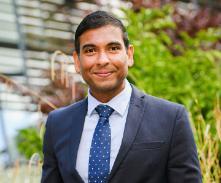
Sankar Sivarajah joined the School of Management at the University of Bradford in December 2017 and is a Professor of Technology Management and Circular Economy and is currently the Dean of the School of Management. 

He enjoys interdisciplinary research and teaching focusing on the use of emerging digital technology by businesses and organisations for the betterment of society. He is the Deputy Editor of Journal of Enterprise Information Management and has published over 70 scientific articles in leading peer-reviewed journals and conferences. His research tackling societal challenges such as energy-efficient digital currencies, consumer behaviour and reduction of waste has featured in reputable media publications such as The World Economic Forum, BBC Yorkshire and The Conversation.

To date, he has a successful track record as Principal and Co-investigator in over £3 million worth of R&I and consultancy projects funded by national, international funding bodies and commercial organisations. Some of the notable funders have been the European Commission (FP7, H2020, Marie Curie), Qatar National Research Fund (QNRF), Innovate UK/DEFRA and British Council focusing on projects addressing business and societal challenges surrounding themes such as Blockchain use in Financial Services, Smart Waste and Cities, Energy-efficient data centres, Social innovation and Participatory Budgeting. Some of the key past and present industry and public sector partners that he has collaborations with are Fraunhofer, Deloitte, Thales, Enel, Telefonica, Vodafone, Leeds Council, West Yorkshire Combined Authority, Cambridgeshire County Council, Hounslow Council, Ellen MacArthur Foundation, Arup and PA Consulting to name a few.

He was awarded a PhD in 2014 in Management Studies from Brunel University London, which focused on the development of a technology evaluation and impact assessment framework for local government authorities. He holds a first-class BSc (Hons) in Business and Management specialising in Computer Sciences from Brunel University London and MSc with Distinction in Management specialising in Entrepreneurship from Bayes Business School (previously known as Cass), City University London. He was also recognised and awarded by Bayes Business School an honorary membership to the Beta Gamma Sigma (BGS) society, an international honour society recognizing business excellence.

He is an elected governing Council Member and Treasurer of the Chartered Association of Business Schools (CABS) in the UK, Fellow of the UK Higher Education Academy (FHEA) and a member of the British Academy of Management (BAM).

Professional Photo of Sankar Sivarajah

Project Lead

Dr Takao Maruyama

Academic Supervisor Lead

Dr Takao Maruyama

Dr Takao Maruyama joined the School of Management in 2019 and is currently Assistant Professor in Business Analytics.  He is also Programme Leader for MSc in Logistics, Data Analytics and Supply Chain Management (https://www.bradford.ac.uk/courses/pg/logistics-data-analytics-supply-chain-management/). 

Prior to joining the School of Management, Takao had gained more than 10 years of industry experience in data analytics in the higher education sector, analysing various types of quantitative data and communicating effectively key findings with senior management teams.  

Takao's research interest focuses on the application of data analytics in a wide range of areas including information systems, healthcare, logistics and supply chain management, and other relevant areas.  Takao has published papers in journals such as the Journal of Business Research, Information Technology and People, and New Technology Work and Employment. 

Dr Takao Maruyama

Academic Supervisor Lead

Professor Zahir Irani

Academic Supervisor

Professor Zahir Irani

In 2016 the University of Bradford appointed Professor Irani as Dean of Faculty (Management and Law), where he led a successful merger with the Faculty of Social Sciences before then assuming the role of a Founding Dean of the new Faculty. During this time, he also secured the the Times Higher Education (THE) Business School of the Year award - for the second time!

Professor Zahir Irani has remained an active researcher throughout his career, graduating 31 PhD students to date and, was featured in 2022/23 by Guide2Research in their top scientists - 64th World rank and 6th UK ranked (for Business and Management).

As a senior academic leader, Professor Irani expanded his portfolio when appointed Deputy Vice-Chancellor at the University of Bradford, where he is accountable for: Four academic Faculties (via Deans), Directorate of Outreach, Recruitment and Marketing (via Associate Directors), Directorate of Student & Academic Services (via Registrar, Head of Career Services and Head of Counselling) and, the Directorate of Learning and Teaching and Quality Enhancement (via Pro-Vice-Chancellor). 

Professor Irani also leads the transformation and growth of the University’s undergraduate, postgraduate (taught and research) educational portfolio through Faculty and Professional services, where he leads on innovation and enhancing the quality of the student experience, teaching practice, curriculum development and support for student learning and success. 

He continues to enjoy a long and successful career in academia, combining wide-ranging research interests, consulting work for leading companies and overseas governments. He has consulted with and for numerous multinationals throughout his career, including BMW, Shell, Deloitte, KPMG, QinetiQ, GlaxoSmithKline (GSK), DEFRA to mention but a few. 

Professor Irani is values driven and, deeply anchored in the Bradford District community, where he supports charities such as Age UK (Bradford and District) and the Volunteering Interfaith Partnerships (VIP) that help vulnerable communities. Professor Irani is also a Governor on the Bradford District Care NHS Foundation Trust. He has received the district governor's award from Rotary International for services to the community.

He is also passionate about leading social, economic and cultural value creation, having been appointed by the Bradford Metropolitan District Council as the Chair of the Bradford Covid-19 Economic Recovery Board that developed a 5-year economic recovery plan (2021-2025); approved in 2021 by the council executive and elected officials. He is also a Higher Education representative on a Cyber Security Steering Group for the Department of Digital, Culture, Media and Sport with a focus on skills development in West Yorkshire.

Professor Irani was named by the Sunday Times, Asian Standard and Bradford Means Business as a leading Bradford influencer.

Professor Zahir Irani

Academic Supervisor

Jason Baines

Incommunities Company Lead

Jason Baines, Incommunities, Director

Jason is the Director of ICT & Business Intelligence at Incommunities. He began his career at Anchor Housing as a trainee Housing Officer before moving onto Brunel & Family Housing in inner city Bradford delivering housing support services in the most challenging of areas. From there Jason took an opportunity to move to the Bradford Council Housing department further developing his housing career but also using his interest and skills in technology as a liaison between the Housing Team and the centralised Computer Division.  

Jason has 34 years' experience in social housing. He has led the functions of IT Infrastructure, Networks, Security and Support. In addition to these core functions Jason has instigated new teams and work streams at Incommunities delivering both internal web application development and a dedicated Business Intelligence team.

Jason is passionate about data driven decision making and it is at the heart of Incommunities strategies moving forwards. Jason believes the next big change step for housing associations is in predictive analytics and believes that Incommunities are well prepared to realise these ambitions, coupling their extensive data warehouse and historical data with AI and Machine Learning algorithms within the internally developed web applications enabling predictive analytics to influence and drive real time decision making.

Jason Baines, Incommunities, Director

Incommunities Company Lead

Richard Barker

Richard Barker

Company Supervisor

Project Benefits

The financial framework aided the company to develop an organisational roadmap to 2025, contributing to detailed analysis of market position and organisational performance. Clarity of marketing position helped to inform decisions such as acquiring or releasing assets and expanding the area of operation.

The sustainability framework influenced a change in culture leading to them achieving their highest regulatory outcome judgements.

Future Work

Incommunities hope to expand the scope of the DSS to allow them to include energy efficiency and develop training programmes further embedding their sustainability strategy into culture. By doing this staff will be able to advise customers on energy efficiency using the tools developed whilst continuing to advise on other money saving strategies.

Abstract image showing outline of home with smart and artificial intelligence data symbols

Applying for a KTP

Businesses who have worked with us have stated that one of the benefits of collaborating with the University is the access provided to our KTP office. The KTP team have put together the infographic below outlining the KTP application process.

We have also linked the Innovate UK website where you can access further information on the application process and KTP in general.

You can also email our KTP team via the email linked below.