
Kateryna Mashchenko
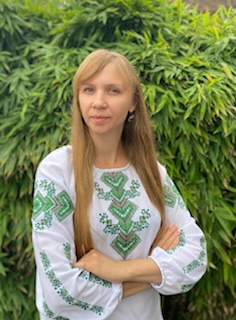
Kateryna Mashchenko
Academic Background: Bachelor Bachelor's degree in Management, Academy of Management and Information Technologies, Faculty of Management, Berdyansk, Ukraine.
Areas of Interest: Peace-building, Conflict Resolution, Gender and Human Rights, Climate change adaptation, Community-based sustainable development, Provision of support for humanitarian workers.
Kateryna is a proactive and committed professional with a passion for serving people. She has experience working in the humanitarian sphere, particularly in the Protection field. Protection encompasses all activities aimed at ensuring full respect for the individual's rights following human rights law, international humanitarian law (which applies in armed conflict) and refugee law.
In 2013 Ukraine faced a political crisis that led to a military conflict between Ukraine and the Russian Federation, followed by the annexation of the Crimean Peninsula and the eastern part of Ukraine by Russia. The hostile military actions that started in April 2014 brought much suffering to the residents of Donbas and led to their forced migration. To help conflict-affected people, Kateryna joined the Danish Refugee Council (DRC) in December 2014 as a Protection Monitor. For seven years, she assumed increasing leadership responsibilities to eventually become Protection Project Manager.
Examples of her work include restoration of damaged social infrastructure through financial support for community projects; empowerment of youth to become active citizens by establishing youth centres and providing life-skills building training; economic and social assistance to mine survivors; and integration of conflict-sensitive education in schools through the contextualisation of international training materials for educators.
In 2016, she supported the launch of the new DRC’s field office in Slovyansk, a town located in the northern part of the conflict-affected Donetsk region. Her task was to start and facilitate the new office’s work, coach a new team, and coordinate with local authorities and humanitarian organisations for successful interventions to reach conflict-affected people. Motivated by service to others, Kateryna led the assessment of the new locations for the program intervention, mainly rural areas with limited access. As a result, the Slovyansk Office grew from three people when she arrived to more than 40 employees and six departments. Her strong relationships with local stakeholders helped the DRC teams efficiently roll out humanitarian programs and reach the most vulnerable people.
Kateryna’s first research experience was in 2015 with the Multi-Sectorial Needs Assessment conducted by the Assessments Capacities Project (ACAPS). The report was used to raise awareness of the issues and needs of the conflict-affected population in Ukraine.
In 2016, she supported the Department of Social Protection in Mariupol Donetsk Oblast in developing a questionnaire to understand people’s motivations to stay in collective centres for internally displaced persons. In 2017, Kateryna led a scoping mission to Luhansk Oblast for the Protection program, where she identified gaps in the service provision and, as a result, intervened with activities to provide support to thousands of people the following year.
In 2018, she conducted the Child Mine Victim Needs Assessment in Donetsk and Luhansk Oblast. In 2019, the report with recommendations was published and presented to the five relevant ministries and the Ombudsman for Human Rights in Ukraine. As a result, child mine victims are guaranteed social benefits. In 2020, based on this report, Kateryna collaborated on an article in the Journal of Conventional Weapons Destruction.
In the fall of 2020, she initiated the “Youth on the Line” assessment in Donetsk Oblast. One of the main objectives was to understand the perception and involvement of youth in the peace process. This assessment helped design a strong peace-building program to motivate adolescents to become proactive citizens who bring peace to their communities.